Grid Hardening at Gila National Forest with Steel 345 kV H Poles
Grid Hardening at Gila National Forest with Steel 345 kV H Poles
September 23, 2024
The El Paso Electric Company needed to rebuild its infrastructure on the Macho Springs — Springerville line. In particular, having wooden poles in the area alongside the Gila National Forest raised concerns about power outages and possible wildfires that the long-time Valmont partner wanted to address.
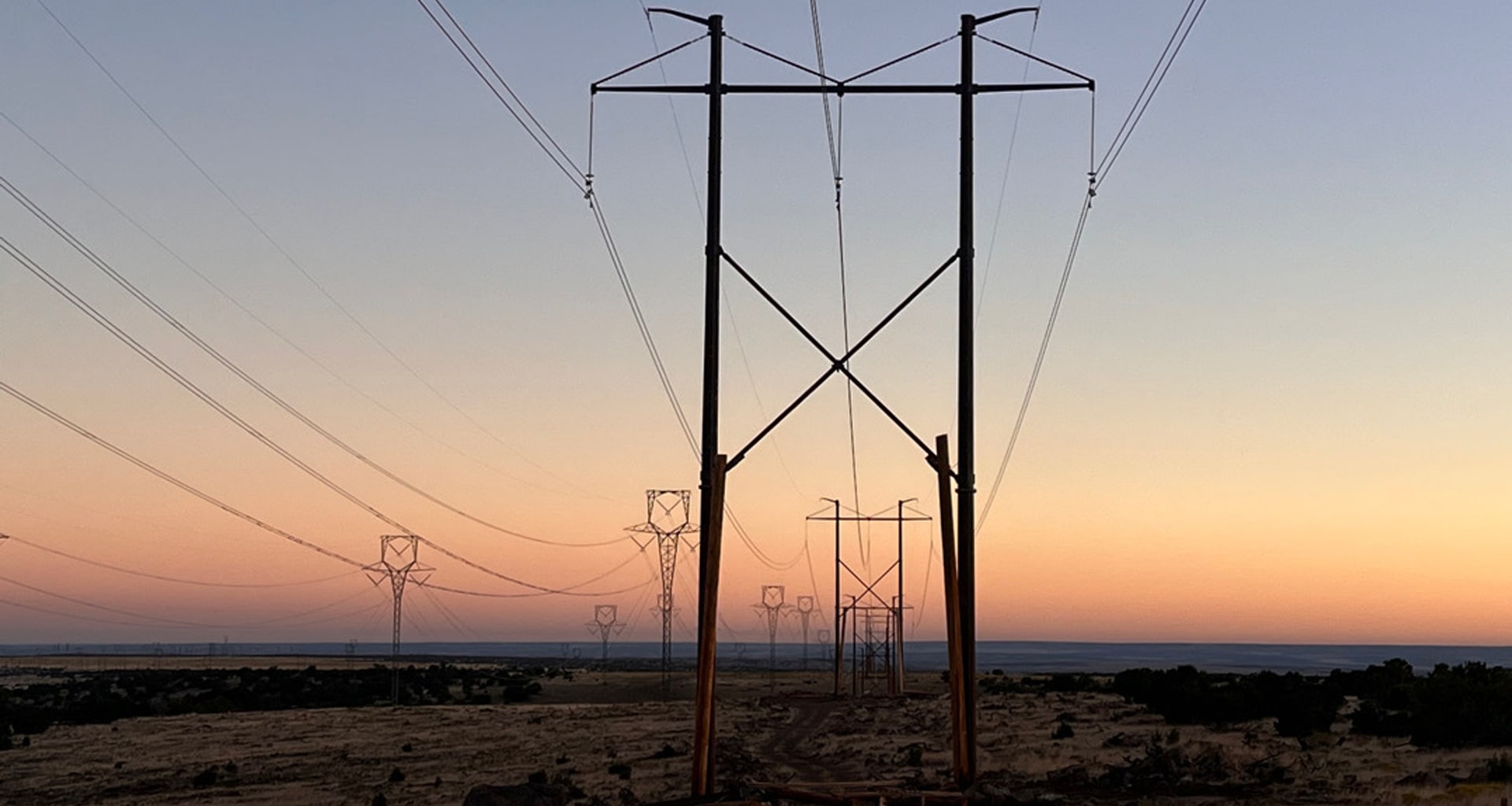
- ProjectHarden grid by replacing wooden pole structures.
- LocationNorthern region of the Gila National Forest, New Mexico
- ChallengeEPE wanted to replace the wooden poles used on its Macho Springs — Springerville transmission line to improve reliability and reduce risk of adverse effects from climate change.
- SolutionInstalling Valmont’s steel 345 kV H Frame tangents, 3-pole Deadend and Running Angle structures gives the company peace of mind it can continue to provide power even as conditions change.
The Macho Springs-Springerville 345 kV rebuild project gives us confidence that we will continue to provide power to our community in a safe way and provide reliability for future generations.— Michelle A. Veloz, Transmission Supervisor, El Paso Electric Company Source: Interview with Veloz In February 2021, most of Texas suffered a major power crisis due to severe winter storms. El Paso Electric Company (EPE) customers were the only ones with consistent power. Why? Because EPE has its own infrastructure separate from the isolated power grid in Texas, said company transmission supervisor Michelle A. Veloz. Looking to harden its grid and ensure EPE can retain its reputation for reliability, the company partnered with Valmont to replace all wooden structures along the Macho Springs - Springerville 345 kV line. Phase one, which began in August 2023, involved 300 poles near the Gila National Forest in a northern region of New Mexico. “This gives us more confidence that we can provide grid reliability and power to our customers,” she said. Over four months, contractor Summit Line Construction installed the Valmont manufactured steel H frame and 3-pole structures. Since the line is located along the Gila National Forest, reaching the installation sites wasn’t always easy. But the wooded, remote environments only emphasized the need for the rebuild. While competitors were already using lattice towers on the same line, EPE was the only utility along the corridor still using wooden poles. This meant EPE had to be mindful of sag and tension limits in the transmission lines to comply with the Federal Energy Regulatory Commission’s orders for transmission station efficiency and safety. Moving to steel and raising the pole height from 10 to 20 feet, removed ground clearance failure concerns. Plus, rebuilding the line will change its rating from 728 MW to 1030 MW, which will benefit EPE profitability, Veloz said. The changes also help EPE avoid having a negative environmental impact in an area that is already seeing an increased number of wildfires with climate change. “That’s been our biggest worry,” Veloz said. “Now we at least know that our structures won’t contribute by burning or adding fuel to a wildfire.” With our focus on conserving resources and improving life, seeing our steel poles protect environmental resources while also enhancing connectivity is rewarding. EPE plans to continue partnering with us to replace the remaining poles on the line by 2026. “The section that we replaced along this line was vital to us,” said Veloz. “We have 400 structures left to replace, but now we can apply this project methodology to our other 345 kV lines with confidence.”